I have mixed feelings about On the Road. Honestly, it wasn't the type of book that I usually like. First off, it was pretty depressing. So many bad things happen, and reading them glossed over like nothing kind of annoyed me.
However, though it wasn't one of my favorites, I am glad I read it. I can see why critics lauded it as a book that defined a generation. I felt the restlessness of the Beat Generation in every page, and now really understand their ideals. I also understand the pitfalls of a life without responsibility.
One cannot deny that Jack Kerouac is a masterful author who created a timeless work. I did not LOVE On the Road, but I can certainly respect it.
Tuesday, March 31, 2009

Monday, March 30, 2009
Crazy Driving Connections
 Independent Reading, Post #10
One thing that I definitely connected with in this chapter is Dean's reckless driving. I know a few people that drive (almost) as crazily as Dean!
"I began to flinch. Dean came up on lines of cars like the Angel of Terror. He almost rammed them along as he looked for an opening.... and always by a hair we made it back to our side as other lines filed by in the opposite direction and I shuddered." (Page 235)
Sal is terrified by his recklessness, which makes this scene one of the funnier ones in the book.
Cruelty Will Never Be "Cool"
Independent Reading, Post #5
In Chapter 2 of Part Three, Sal travels to San Francisco again and visits Dean. Dean lives in a nice house with his pregnant wife Camille and their daughter Amy. However, it is Dean's awful treatment and neglect of his family that moved and upset me.
Dean is not exactly a "family man"- he seems to be the true spirit of the Beat Generation epitomized in flesh and blood. He cannot bear to stay any one place more than a month, especially his home. This obviously upsets and hurts his marriage. He is a pathological liar to his wife- constantly making empty promises that he cannot keep in any way. Dean has sporadic obsessions with his mistress, Marylou, and will leave for days to be with her. The effect of this treatment on Camille is substantial.
"It was horrible to hear Camille sobbing so. We couldn't stand it and went out to buy beer and brought it back to the kitchen. Camille finally went to sleep or spent in the night staring blankly at the dark." (Page 184)
Perhaps, for me, the most moving/shocking thing about this entire passage is not Dean's treatment of his wife, but rather Sal's detached and uncaring way of describing it.
Etta James' song "Anything to Say You're Mine", which was popular when this book was written, reflects many of Camille's feelings.
Lyrics:
I'm so blue
'cause I'm worried over you
I, I sometimes wonder
why I never hear from you
You promised to write me
each and everyday
and I haven't heard from you
since you went away
I sit by my window pane
hoping for a letter
one that never came
My heart cries for just
one little line
anything to say you're mine
In Chapter 2 of Part Three, Sal travels to San Francisco again and visits Dean. Dean lives in a nice house with his pregnant wife Camille and their daughter Amy. However, it is Dean's awful treatment and neglect of his family that moved and upset me.
Dean is not exactly a "family man"- he seems to be the true spirit of the Beat Generation epitomized in flesh and blood. He cannot bear to stay any one place more than a month, especially his home. This obviously upsets and hurts his marriage. He is a pathological liar to his wife- constantly making empty promises that he cannot keep in any way. Dean has sporadic obsessions with his mistress, Marylou, and will leave for days to be with her. The effect of this treatment on Camille is substantial.
"It was horrible to hear Camille sobbing so. We couldn't stand it and went out to buy beer and brought it back to the kitchen. Camille finally went to sleep or spent in the night staring blankly at the dark." (Page 184)
Perhaps, for me, the most moving/shocking thing about this entire passage is not Dean's treatment of his wife, but rather Sal's detached and uncaring way of describing it.
Etta James' song "Anything to Say You're Mine", which was popular when this book was written, reflects many of Camille's feelings.
Lyrics:
I'm so blue
'cause I'm worried over you
I, I sometimes wonder
why I never hear from you
You promised to write me
each and everyday
and I haven't heard from you
since you went away
I sit by my window pane
hoping for a letter
one that never came
My heart cries for just
one little line
anything to say you're mine
Predictions: Partially Correct
Independent Reading, Post #7
In my Post #6, I predicted that the group would splinter because of the problems of their hard-partying lifestyles. In short, I was partially correct.
Dean, Ed, and Carlo went their separate ways- in fact, the narrator doesn't see them for a full year!
However, they are reunited when Dean drives cross country with Ed to pick up Sal to go on another trip. I was extremely surprised when Sal agreed to go with them.
In my Post #6, I predicted that the group would splinter because of the problems of their hard-partying lifestyles. In short, I was partially correct.
Dean, Ed, and Carlo went their separate ways- in fact, the narrator doesn't see them for a full year!
However, they are reunited when Dean drives cross country with Ed to pick up Sal to go on another trip. I was extremely surprised when Sal agreed to go with them.
Sunday, March 29, 2009
Advice for Dean, Ed, & Sal
 Independent Reading, Post #13
In the beginning of Part Two, Sal recounts Dean's exploits of the past year. He rashly married his girlfriend in San Francisco, and had a baby girl with her. After all of this, he decides one day to randomly leave and go on a cross-country road trip with his friend Ed Dunkel. He blows all of his savings on a new car, and the two have no money for the trip. In order to fund it, Dunkel marries a girl in hopes that she will come with them and "foot the bill".
"By the time they got to Tucson she was broke. Dean and Ed gave her the slip in a hotel lobby and resumed with voyage alone, with the sailor, and without a qualm." (Page 111)
Now, this particular choice completely shocked me. Though the narrator seems to glorify and idolize Dean and his friends, and their carefree lives, this is just downright WRONG, immoral, irresponsible, and cruel. If I had to give Ed and Dean advice, I would tell them to go back to San Francisco, settle down, and start acting their ages. I would also tell Sal to find a better role model.
If they want to be careless "on the road", then they shouldn't try to build connections with other people, simply to let them down time and time again.
Capitalism Conquers All
 When you search "Che Guevara" on Google, one of the first hits is The Che Store. Along with its famous $17.99 t-shirts, they sell books, hats, key chains, and necklaces, all emblazoned with Che's image. Poor Che. His legacy is being used to fund an American company.
There's a Che-themed flavor of Ben & Jerry's (Cherry Guevara), "El Che" Cola, Che Guevara bobbleheads, and even Che cologne ("For those that want to smell like a revolutionary"). It is odd that those who idolize him the most, and try to "spread his message", are making money off of him.
As his family has made no great public statement regarding the use of Guevara for monetary gain, they obviously don't care. I wonder if Che would be enraged by all of this. Perhaps this is what he wanted all along...
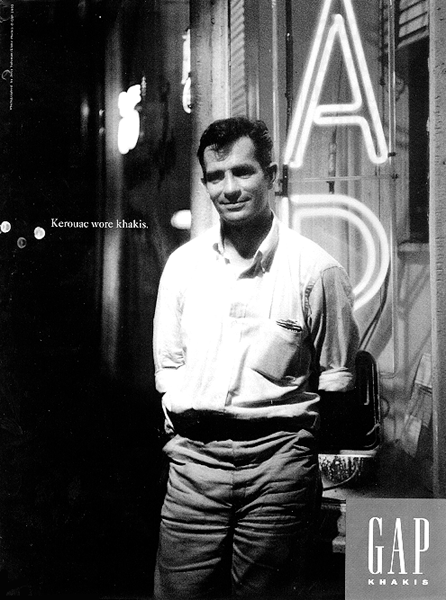
I recently stumbled across this ad. Proclaiming, "Kerouac wore khakis", Gap hopes to sell their overpriced pants to the masses. This is ironic: Kerouac's fictional self, Sal Paradise, spends most of On the Road in unwashed ragged clothes. One of his central ideals was a lack of materialism. He believed that connections to anything- people, and ESPECIALLY possessions, simply tied you down. He's probably rolling in his grave right now.
Saturday, March 28, 2009
A Question of Style
Independent Reading, Post #11
Kerouac has a very interesting style. He isn't one for long sentences or flowery language- he usually just gets to the point. It's a strange, choppy way of writing that is very modern. His figurative language use is minimal, but he has a way with few words that is quietly eloquent. An example of a good description would be how he describes meeting his Mexican lover's family and her home.
"Her five brothers were singing melodious songs in Spanish. The stars bent over the little roof; smoke poked from the stovepipe chimney. I smelled mashed beans and chili. The old man growled." (Page 100)
When I first began reading, I found this manner of writing irritating, but the more I read, the more it grew on me.
After research, I discovered that he had a name for his style: Spontaneous Prose. Here's a quick explanation composed by Kerouac, revealing the essentials of this manner of writing.
Kerouac has a very interesting style. He isn't one for long sentences or flowery language- he usually just gets to the point. It's a strange, choppy way of writing that is very modern. His figurative language use is minimal, but he has a way with few words that is quietly eloquent. An example of a good description would be how he describes meeting his Mexican lover's family and her home.
"Her five brothers were singing melodious songs in Spanish. The stars bent over the little roof; smoke poked from the stovepipe chimney. I smelled mashed beans and chili. The old man growled." (Page 100)
When I first began reading, I found this manner of writing irritating, but the more I read, the more it grew on me.
After research, I discovered that he had a name for his style: Spontaneous Prose. Here's a quick explanation composed by Kerouac, revealing the essentials of this manner of writing.
Friday, March 27, 2009
Pivotal Quotation
Independent Reading, Post #14
This key quote happens in Chapter 10.
Sal Paradise hooks up with Rita Bettencourt, a waitress in Denver. They are in an apartment, lying in bed together, when Sal asks her what she wants out of life. She replies, "I don't know, just wait on tables and get along."
They lie for a bit longer, when the important quote happens...
"She turned away wearily. We lay on our backs, looking at the ceiling and wondering what God had wrought when He made life so sad." (page 58)
Though OTR seems to glorify the careless/carefree attitude of the Beat Generation, it shows its pitfalls. The author recognizes that a life without responsibilities is empty.
This is a major theme throughout the book. This sentiment is expressed in this quote in the specific scene. Sal has meaningless sex, lies on his back, and reflects that life is "sad". Sad, indeed.
This key quote happens in Chapter 10.
Sal Paradise hooks up with Rita Bettencourt, a waitress in Denver. They are in an apartment, lying in bed together, when Sal asks her what she wants out of life. She replies, "I don't know, just wait on tables and get along."
They lie for a bit longer, when the important quote happens...
"She turned away wearily. We lay on our backs, looking at the ceiling and wondering what God had wrought when He made life so sad." (page 58)
Though OTR seems to glorify the careless/carefree attitude of the Beat Generation, it shows its pitfalls. The author recognizes that a life without responsibilities is empty.
This is a major theme throughout the book. This sentiment is expressed in this quote in the specific scene. Sal has meaningless sex, lies on his back, and reflects that life is "sad". Sad, indeed.
Monday, March 16, 2009
Some Predictions...
 Independent Reading, Post #6
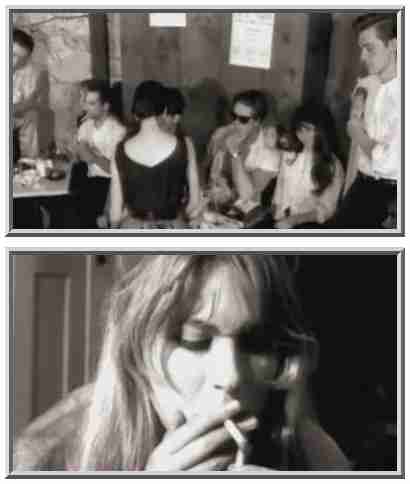
I'm currently at the beginning of Chapter 10 in Part One. Sal, Tim, Babe, and their friends are just returning to Denver from their interesting excursion in the mountains. This trip, however, was like nothing they expected. They had many personal problems, and even got into public brawls. Their nonstop partying didn't make them happier- in fact, it caused most of the problems. Sal reflects on the morning they leave like this: "Everything seemed to be collapsing. As we were going out to the car Babe slipped and fell flat on her face...The sad ride back to Denver began." (page 56)
Dean and Carlo are nowhere to be found, and it is clear that Sal's beginning to become annoyed. I predict major problems in their friendship, along with problems with this group of friends in general. I think that they will split up partially or even splinter entirely. They cannot coexist peacefully in these sort of circumstances.
Friday, March 13, 2009
Confusing Passage in Colorado
 Independent Reading, Post #2
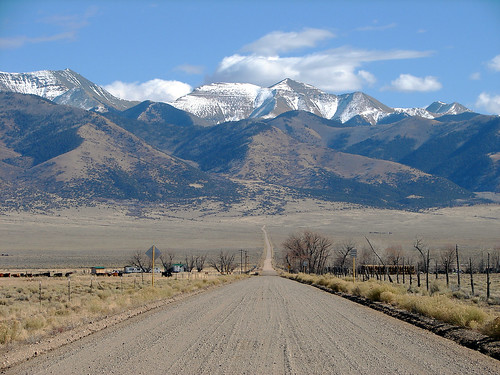
I'm about confused about a passage in Chapter nine. Sal, Dean, and the gang go out partying in Colorado, as per usual. They go to a bar in an old mining town and a fight is started. It's unclear as to how the fight starts, however. Kerouac's language is extremely vague. ("Rawlins handed me his glass and knocked him down with one punch." page 55)
They go outside, and Sal wonders "what the Spirit of the Mountain" is thinking. As Kerouac isn't prone to flowery language, and is usually pretty literal, this statement took me off guard. Sal's visions of "ghosts of old miners" is very strange and lends an almost dreamlike quality to this passage.
Thursday, March 12, 2009
Thesis for Che Theme
"Che's intelligence and vision made him an ideal leader for an all-too brutal military regime."
Wednesday, March 11, 2009
My Do Now
Write a haiku about Che in Peru.
Remember, a haiku is three lines: the first, five syllables, the second, seven, and the last five again.
Remember, a haiku is three lines: the first, five syllables, the second, seven, and the last five again.
Monday, March 9, 2009
What's in a Title?
 Independent Reading, Post #18
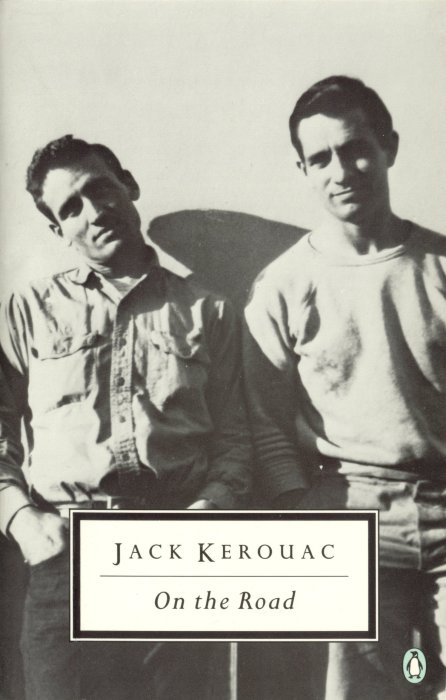
I'd say On the Road is a pretty appropriate title for this book. The novel mainly discusses Kerouac's adventures on his many cross-country road trips. Though he spends a limited amount of time detailing his times spent in one place, it is clear that the author's most poignant experiences occur while "on the open road".
The title concisely communicates to a potential reader what the book is all about. However, if forced to pick a new one, I would call the book Spirit of the Youth. OTR is famous for communicating a lot about the Beat generation- a generation of youthful dreamers. The irresponsibility and carefree nature of the characters truly shows the spirit of the youth-something that would fully erupt in the generations to come.
Who Am I? - Che
 (From the perspective of Che)
Who am I? I am Che Guevara, no longer Ernesto. Revolution is in my heart and the power of Marx flows in my veins. I am lucky enough and strong enough to stand up to the oppressors. I am the voice of the people.
What is my impact on the world around me? I change the world every day. My revolutions, though bloody in nature, will bring peace and happiness in the long run. Socialism's lessons are taught through gun and grenade. Someone has to take the burden of bringing war, and I gladly take it on. There must be chaos before tranquility, and I bring the chaos, but will work on instilling tranquility also.
Friday, March 6, 2009
Similarities Between On the Road & TMD
 Independent Reading, Post #16
For my independent reading project, I have chosen to read Jack Kerouac's On the Road. I think it relates perfectly to Ernesto Guevara's The Motorcycle Diaries.
On the Road is autobiographical, just like TMD. It details Kerouac's adventures as he embarks on several cross-country road trips with his friends. It was the defining work of the "Beat Generation" of the 1950s, and marked a change in American literature.
The two books share many common themes. One would be that of a quest for identity: Che finds his political and moral ideals, while Kerouac is searching for what it means to be a young American. The idea of being on a journey is very powerfully used in both of the books.
Though Guevara and Kerouac grew to be known for very different reasons, it is intriguing to watch them grow through their similar autobiographical novels. They started out in the same place: young, disillusioned men searching for something else.
For Che, that "something else" was his Marxist revolution. For Jack Kerouac, it was the cultural revolution that took place in 1960s America.
Thursday, March 5, 2009
Introductory Post
Welcome to the Independent Reading phase of my blog! I'll begin mixing in posts about my independent reading assignment, along my usual do nows about Che.
I'm reading On the Road by Jack Kerouac. I'm excited to read it- it looks really good!
Hopefully I'll post at least once or twice a week, but I'll probably end up procrastinating... Hope I do well.
I'm reading On the Road by Jack Kerouac. I'm excited to read it- it looks really good!
Hopefully I'll post at least once or twice a week, but I'll probably end up procrastinating... Hope I do well.

Che in Chile

I think that when Che met the asthmatic woman with the heart condition, it profoundly affected him. He said that he felt completely helpless as a doctor in that moment, and such a feeling of uselessness definitely influenced his political views. Che saw how the current system had basically ignored her, offering no aid.
He wanted to help that old woman, and others like her, in the future. I can see the development of his Marxist views through experiences such as this.
Subscribe to:
Posts (Atom)
